

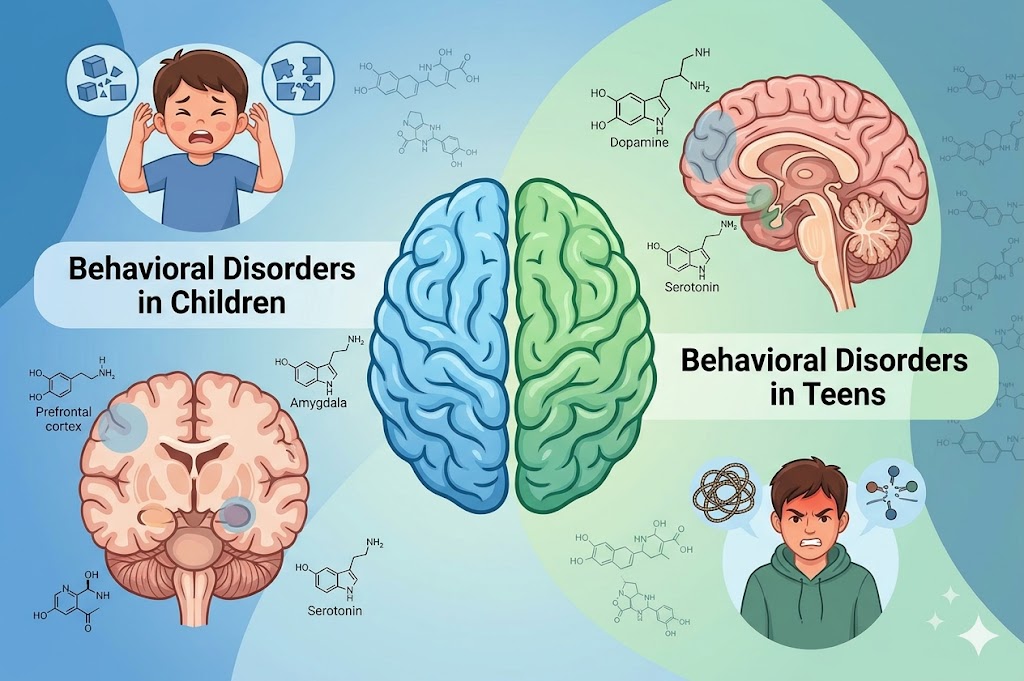
Behavioral Disorders in Children
Every child grows, learns, and expresses emotions in their own way. Occasional tantrums, mood changes, disobedience, or attention issues can be a normal part of childhood. However, when difficult behaviour becomes frequent, intense, long-lasting, or starts affecting home life, school performance, relationships, or safety, it may need attention.
Behavioural and emotional concerns in children should not be ignored or dismissed as “just bad behaviour.” In many cases, a child’s behaviour is their way of communicating stress, fear, confusion, emotional discomfort, or difficulty coping with their surroundings.
Warning Signs Parents Should Look Out For
Parents or caregivers should consider seeking professional guidance if a child repeatedly shows behaviours such as:
- Harming themselves or threatening to harm other people or pets
- Damaging or destroying objects
- Frequent lying, stealing, or bullying
- Declining school performance or skipping school
- Early smoking, alcohol use, or drug use
- Age-inappropriate sexual behaviour
- Frequent tantrums, arguments, or aggressive reactions
- Persistent hostility toward parents, teachers, or authority figures
- Social withdrawal, sadness, fearfulness, or loss of interest in activities
If a child talks about self-harm, suicide, or harming others, it should be treated as urgent. Parents should seek immediate help from a qualified mental health professional or emergency medical service.
Possible Causes of Behavioural Disorders in Children
Behavioural concerns usually do not arise from one single reason. They may develop due to a combination of physical, emotional, family-related, social, and environmental factors.
- Biological factors: genetics, brain development, chemical imbalances, neurological conditions, or head injury.
- Emotional factors: anxiety, sadness, low confidence, fear, insecurity, or difficulty expressing feelings.
- Environmental factors: exposure to violence, extreme stress, parental conflict, bullying, academic pressure, major life changes, or loss of a loved one.
- Family and developmental factors: changes such as the birth of a sibling, divorce, relocation, illness in the family, or inconsistent parenting patterns.
Common Childhood Emotional and Behavioural Disorders
The following are some commonly recognised emotional, developmental, and behavioural conditions seen in children and adolescents.
Anxiety Disorders
Children with anxiety disorders may experience excessive fear, worry, nervousness, or uneasiness that interferes with daily life. While fear and worry are common in childhood, persistent or extreme anxiety may need professional evaluation.
Common anxiety-related conditions include:
- Phobias: intense and unrealistic fear of specific objects, places, or situations.
- Generalized anxiety: excessive worry about many areas of life without a clear reason.
- Panic attacks: sudden episodes of intense fear with symptoms like rapid heartbeat, sweating, trembling, or dizziness.
- Obsessive-compulsive symptoms: repeated unwanted thoughts or repetitive behaviours.
- Post-traumatic stress symptoms: flashbacks, fear, nightmares, or distress after trauma, abuse, violence, accidents, or major stressful events.
Depression in Children
Depression can occur in children and teenagers. It may not always look like sadness. Some children become irritable, withdrawn, angry, tired, or uninterested in things they previously enjoyed.
A child with depression may show changes in:
- Emotions: sadness, crying, irritability, guilt, or feelings of worthlessness.
- Motivation: loss of interest in play, hobbies, friends, or schoolwork.
- Physical health: changes in appetite, sleep, energy, or repeated vague complaints like stomach pain or headache.
- Thoughts: negative beliefs about themselves, hopelessness, or feeling that nothing will improve.
Bipolar Mood Disorder
Bipolar mood disorder involves significant mood changes, ranging from unusually high, energetic, or irritable phases to low or depressive phases. These mood changes are more intense than normal emotional ups and downs and can affect sleep, behaviour, judgement, relationships, and school life.
Autism Spectrum Disorder
Autism spectrum disorder affects communication, social interaction, behaviour, and the way a child experiences the world. Signs may appear in early childhood and can vary from mild to more noticeable challenges.
Children with autism may show:
- Difficulty with social interaction or eye contact
- Delayed or unusual speech and communication patterns
- Repetitive behaviours or restricted interests
- Sensitivity to sounds, textures, lights, routines, or changes
- Difficulty understanding social cues or expressing emotions
Early identification and supportive intervention can help children develop communication, social, learning, and coping skills.
Oppositional Defiant Disorder (ODD)
A child with Oppositional Defiant Disorder may frequently lose temper, argue with adults, refuse to follow rules, deliberately annoy others, or show anger and resentment. These behaviours are more persistent and intense than typical childhood defiance.
Conduct Disorder (CD)
Conduct Disorder involves more serious behavioural concerns such as aggression, bullying, stealing, lying, property damage, rule-breaking, or harming others. Children with these patterns may struggle with empathy, impulse control, anger, or trust.
These children may also feel threatened, suspicious, rejected, or misunderstood. If their communication and social skills are affected, they may find it difficult to build friendships, which can increase frustration, sadness, and anger.
ADHD - Attention-Deficit Hyperactivity Disorder
Children with Attention-Deficit Hyperactivity Disorder may find it difficult to focus, sit still, wait for their turn, complete tasks, or control impulses. ADHD symptoms are usually seen in more than one setting, such as both home and school.
Common signs may include:
- Difficulty paying attention or following instructions
- Being easily distracted
- Excessive activity or restlessness
- Impulsive behaviour
- Difficulty waiting, taking turns, or staying quiet
- Forgetfulness or difficulty completing schoolwork
ADHD is not simply laziness or lack of discipline. Children with ADHD often need structured support, patience, behavioural strategies, school cooperation, and sometimes medical guidance.
Learning Disorders
Learning disorders can affect how a child receives, processes, understands, remembers, or expresses information. These difficulties may affect reading, writing, maths, language, coordination, attention, or self-control.
Children with learning difficulties may become frustrated, avoid schoolwork, lose confidence, or develop behavioural problems because they feel misunderstood or pressured.
How Parents Can Help
The first step is to observe the child without judgement. Instead of only asking, “Why is my child behaving badly?”, it is more useful to ask, “What is my child trying to communicate through this behaviour?”
- Maintain a calm and predictable home routine.
- Listen to the child’s feelings without immediately scolding or dismissing them.
- Set clear, age-appropriate boundaries.
- Appreciate positive behaviour instead of focusing only on mistakes.
- Coordinate with teachers if school performance or behaviour is affected.
- Reduce exposure to violence, excessive screen time, and stressful environments where possible.
- Seek professional help if behaviour is intense, unsafe, or persistent.
Conservative and Behavioural Management
In many cases, behavioural concerns improve when the child’s environment, routine, emotional support, and communication patterns are improved. For example, a child feeling neglected after the birth of a sibling may respond well to reassurance, attention, and sensitive parenting.
Counselling, behavioural therapy, parental guidance, school support, and family therapy can also play an important role. These approaches help parents understand the triggers behind the child’s behaviour and support the child in healthier ways.
Homeopathic Supportive Management
Homeopathy looks at the child as a whole rather than focusing only on the name of the condition. A detailed case history helps the physician understand the child’s physical, emotional, mental, behavioural, and environmental patterns.
During homeopathic case-taking, details may be collected about the child’s:
- Current complaints and behaviour patterns
- Sleep, appetite, fears, likes, dislikes, and daily routine
- Past illnesses and family health history
- Emotional nature and response to stress
- School environment and peer relationships
- Family dynamics and major life events
- Pregnancy, birth, and early developmental history
The purpose is to understand the child’s constitution and identify the factors that may be contributing to emotional or behavioural imbalance. Homeopathic care may be used as a supportive approach along with appropriate counselling, behavioural therapy, parental guidance, and medical care whenever required.
When to Seek Professional Help
Parents should seek help if the child’s behaviour continues for several months, becomes aggressive or unsafe, affects school performance, causes social isolation, or creates significant stress within the family.
Early support can make a major difference. With patience, understanding, structured care, and the right professional guidance, many children can learn healthier ways to express emotions, manage behaviour, and build confidence.