

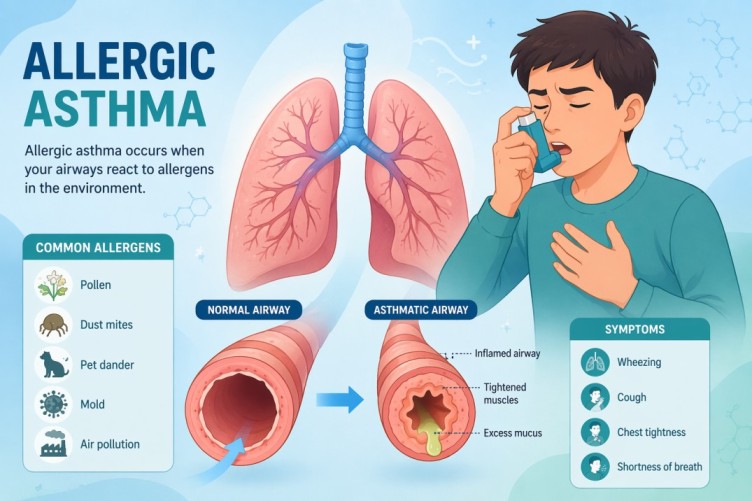
Allergic Ashtma
With increasing pollution and decreasing air quality, many disease conditions have been triggered. Among these, there has been a rise in respiratory diseases, one of the most common being allergic asthma. It can present with symptoms such as shortness of breath, cough, stuffy nose, redness of the eyes, and more.
What Is Allergic Asthma?
Allergic asthma is the most common type of asthma triggered by allergens. These allergens may be present in the products you use, the food you eat, or the air you breathe, as your airways are extra sensitive to certain allergens.
Once these allergens enter your body, your immune system goes into overdrive. The muscles surrounding your airways become tense. Over time, the airways swell and fill with thick mucus, which narrows the airways and causes difficulty in breathing.
Symptoms
- Shortness of breath
- Coughing
- Tightness in the chest
- Wheezing
- Stuffy nose
- Itchy eyes
- Sneezing
- Rash
What Allergens Can Cause Allergic Asthma?
- Pollen
- Mold, which is typically found in places that hold moisture, such as basements, and produces spores that get into the air
- Dust mites
- Cockroaches
- Dander, such as skin flakes or hair of animals
Some other irritants can also cause an asthma attack, even though they may not cause an allergic reaction in normal people. These include:
- Smoke from crackers, candles, or tobacco
- Cold air
- Strong chemical odours
- Dusty rooms
How Can You Manage Allergic Asthma?
- Identify your triggers
- Avoid areas with high pollen or dust in the air
- Check for pet allergies
- Develop an action plan and always carry emergency medication in case of an emergency
- Start spirometry exercises to improve lung activity
Homeopathy for Allergic Asthma
It reduces drug dependency.
It reduces the body’s reaction towards allergens.
The ability of homeopathy to treat the root cause of the disease helps in managing asthma effectively. These medicines stimulate the body’s own restorative processes, mainly by strengthening its natural healing system so that it becomes strong enough to fight the condition.
Homeopathic medicine helps the body by reducing its reaction towards allergens, thereby helping to prevent attacks.